

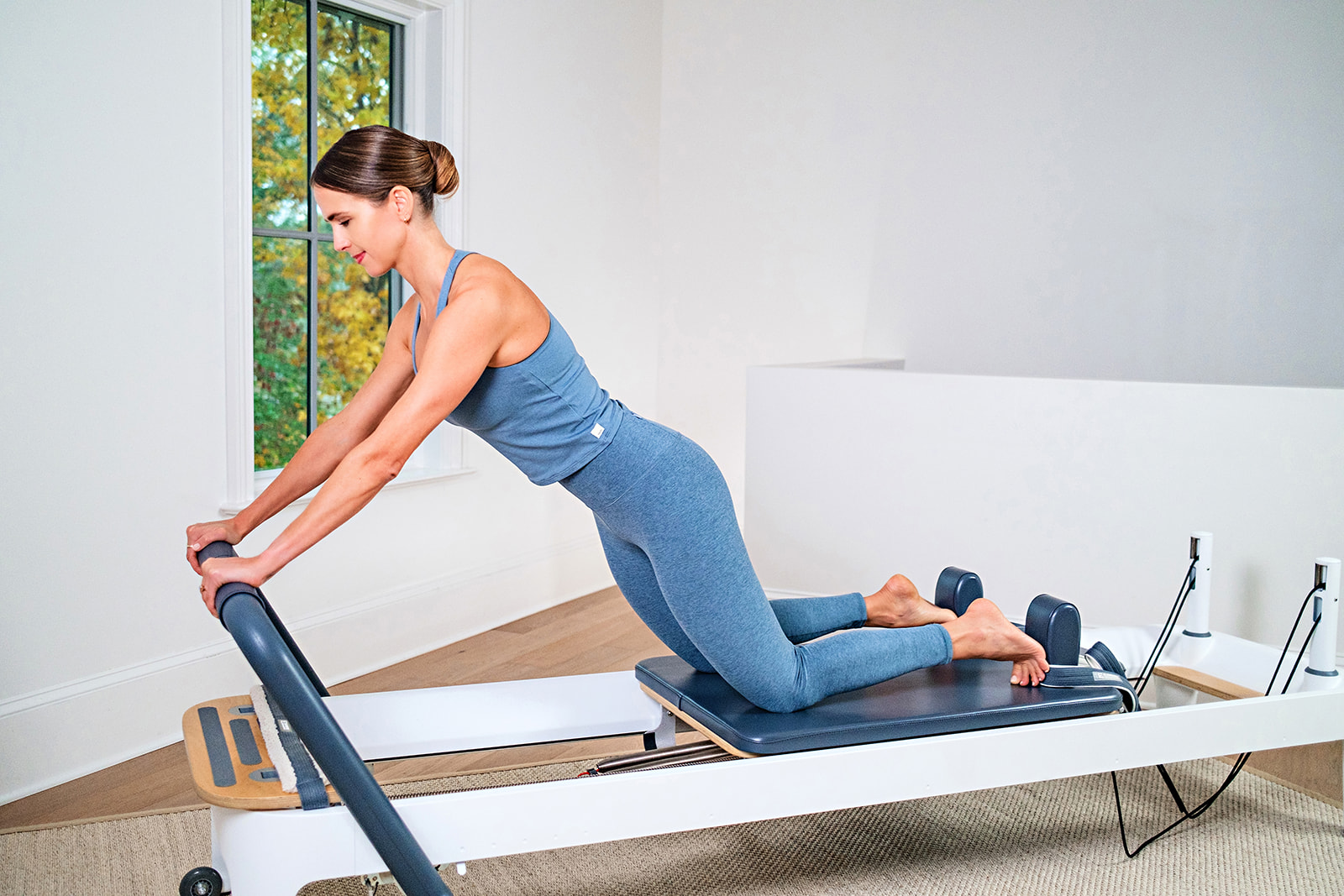


Sciatica can feel debilitating, causing pain, tingling, numbness, or discomfort that travels from the lower back or buttock into the leg. It can make everyday movements—and the idea of exercising—feel intimidating.
Pilates may help you stay active, rebuild strength, and explore comfortable movement while managing sciatica. However, sciatica has different causes and does not respond to one universal exercise or stretch. Pilates should support the care recommended by your healthcare provider, not replace an appropriate medical evaluation.
At Saran Pilates, we’ve created a Sciatica Program that combines expert education with gentle, thoughtfully modified workouts.
How Pilates May Help with Sciatica
Pilates uses controlled, low-impact movement that can help you:
- Strengthen the abdominal, back, and hip muscles that support movement
- Improve coordination and body awareness
- Explore comfortable movement through the hips and spine
- Build confidence after pain has made movement feel uncertain
- Stay active without relying on high-impact exercise
Pilates does not directly remove pressure from a nerve or resolve every condition that causes sciatic pain. Its value lies in helping you move, build capacity, and discover which positions feel supportive for your body.
What I Tell My Pilates Students with Sciatica
The first thing I tell students is that there isn’t one “correct” position for sciatica.
One person may feel better lying down with bent knees, while another prefers standing or walking. One student may tolerate spinal flexion comfortably, while another feels better with a more neutral spine. Your setup should be based on how your symptoms respond—not on forcing your body to match a picture.
During a workout, I look for movement that feels manageable and does not cause symptoms to become sharper, stronger, or travel farther down the leg. Mild muscular effort is different from increasing nerve-like pain, burning, tingling, or numbness.
I also remind students that this is not the day to chase their deepest stretch or hardest variation. We are looking for a starting point your body trusts.
Pilates Setups That May Feel More Supportive
These options can make a Pilates session feel more comfortable:
Lie on Your Back with Your Knees Bent
A supported, bent-knee position can reduce the demand on your back and hamstrings. Keep your feet on the mat or Reformer footbar and allow your spine to settle into a comfortable position rather than forcing it flat.
If lying completely flat is uncomfortable, adjust the headrest appropriately or ask your instructor about safe support for your equipment.
Choose Side-Lying Work
Side-lying exercises can strengthen the hips without requiring prolonged sitting, standing, or deep spinal movement. Keep your knees slightly bent and use a cushion or head support if needed.
Use a Smaller Range of Motion
You do not need to straighten your knees completely, lower your legs deeply, or move your spine through its fullest range. A smaller movement can still build strength and control.
Change Positions Regularly
If sitting, standing, or lying down for too long increases your symptoms, transition between positions during the workout. Sometimes the most helpful modification is simply not remaining in one setup for an extended period.
What I Usually Avoid During a Sciatica Flare-Up
There is no permanent list of exercises everyone with sciatica must avoid. During an active flare-up, however, I generally avoid movements that reproduce or intensify a student’s symptoms.
That may include:
- Aggressive hamstring stretching
- Deep forward folding or loaded spinal flexion
- Large twisting movements
- Straight-leg exercises that increase pulling down the leg
- Heavy resistance that causes straining or breath-holding
- Unstable standing exercises before the student feels ready
- Repeated movements that make pain, tingling, or numbness travel farther down the leg
A stretch that feels intense is not automatically more effective. If a movement creates a sharp, electrical, burning, or radiating sensation, come out of it rather than trying to push through.
Reformer Modifications for Sciatica
The Reformer can be helpful because its springs provide both resistance and support. The setup matters.
Create a Stable Carriage
For footwork, I often begin with moderate spring resistance so the carriage feels predictable and supported. Springs that are too light may make the student work harder to control the carriage, while springs that are too heavy may encourage straining.
Keep the Range Comfortable
You do not need to bring the carriage completely home if deep knee or hip flexion increases your symptoms. You also do not need to press to perfectly straight legs. Work within the middle range that feels smooth and controlled.
Begin with Bent-Knee Positions
Bent knees can reduce the pulling sensation that some students feel along the back of the leg. I may begin with parallel footwork or gentle heel presses before considering straight-leg exercises.
Keep Bridges Low—or Leave Them Out
A small bridge may feel good for some students, but it is not required. I keep the range low and watch for symptoms traveling into the leg. The headrest must be flat before bridging on the Reformer.
Delay Unstable Standing Work
Exercises such as standing splits, scooter, or lunges may require more balance and control than feels appropriate during a flare-up. Supported, lying, or side-lying exercises are often a more comfortable place to begin.
My Go-To Gentle Starting Sequence
When a student has been medically cleared to exercise, I begin with a short sequence designed to establish comfort—not test limits.
1. Supported Breathing
Lie on your back with your knees bent and feet supported. Take three to five easy breaths, allowing the ribs to expand without forcing the back into a particular shape.
2. Ankle Pumps
Gently point and flex the feet for six to ten repetitions. This introduces movement without asking much from the spine.
3. Heel Slides
Slide one heel a short distance away, then return it. Alternate sides for four to six repetitions, stopping before the leg becomes heavy or symptoms increase.
4. Supported Reformer Footwork
Use a stable spring setting and begin with the feet parallel. Press the carriage out and return through a comfortable range for six to ten slow repetitions.
5. Small Knee Openings
With both feet supported, allow one knee to open slightly to the side without rolling the pelvis. Return it and alternate sides. Keep the movement small.
6. Low Bridge—Only If It Feels Good
With the Reformer headrest flat, exhale and lift the pelvis only a few inches. Lower slowly. Perform three to five repetitions, or skip this completely if it increases symptoms.
7. Gentle Side-Lying Hip Work
Lie on your comfortable side with the knees bent. Slowly open and close the top knee or slide the top leg forward and back through a small range.
The entire sequence can take approximately 15 minutes. I would rather have a student finish feeling comfortable and confident than add more exercises simply to make the session longer.
At-Home Tips to Support Your Movement
Keep Moving Gently
If prolonged sitting makes you feel worse, take brief standing or walking breaks throughout the day. If prolonged standing aggravates your symptoms, alternate it with comfortable seated or lying positions.
Avoid Forcing Stretches
Gentle movement in and out of a comfortable range may feel better than holding a strong stretch. Stop if a stretch increases radiating pain, tingling, burning, or numbness.
Let Posture Be Adaptable
Instead of trying to hold one “perfect” posture, change positions regularly. Use back support when sitting if it feels helpful, relax your shoulders, and choose a position that allows you to breathe comfortably.
Track Your Response
Notice how you feel during the workout, immediately afterward, and later that day. This can help you and your instructor identify which movements and ranges are appropriate.
When to Seek Medical Guidance
This article shares my approach as a Pilates instructor; it is not medical advice or an individual exercise prescription.
Speak with a healthcare professional or physical therapist if your symptoms are severe, worsening, persistent, or affecting your normal activities.
Guided Support and Expert Insight
The Saran Pilates Sciatica Program offers a more structured approach. Physical therapist Elizabeth Dalrymple from Thrive Physio shares guidance for understanding sciatica symptoms, while I lead a gentle Reformer workout focused on comfortable movement, alignment, and strength.
Empowering Your Return to Movement
Pilates can offer a sustainable way to stay active and rebuild confidence when sciatica has made movement feel uncertain.
Start small. Choose supportive positions. Pay attention to how your symptoms respond. Progress does not require forcing your body through pain—it comes from finding movement you can return to consistently.
Explore the Saran Pilates Sciatica Program and start your free trial today.
Gabrielle Saran
Frequently Asked Questions About Pilates and Sciatica
Is Pilates good for sciatica?
Pilates may help some people with sciatica stay active, improve strength, and regain confidence in movement. Its usefulness depends on what is causing your symptoms and how your body responds to particular positions. Pilates should complement guidance from a qualified healthcare professional—not replace an evaluation or individualized treatment.
Which Pilates exercises should you avoid with sciatica?
There is no universal list, but avoid exercises that make pain, tingling, burning, or numbness become stronger or travel farther down your leg. During a flare-up, this may include aggressive hamstring stretches, deep forward folds, loaded spinal flexion, large twists, straight-leg exercises, or unstable standing work. Modify the range or skip the exercise instead of pushing through radiating symptoms.
How often should you do Pilates for sciatica?
Begin with short, gentle sessions two or three times per week, provided your healthcare professional has cleared you to exercise. A 10 to 20-minute session may be enough at first. Give your body time to respond, and increase the duration or frequency gradually. Gentle walking and regular position changes can complement your Pilates practice between sessions.
Can Pilates make sciatica worse?
Yes, an exercise can aggravate symptoms if its position, resistance, or range is not appropriate for you. Pilates should not cause increasing nerve-like pain, tingling, numbness, or weakness. Stop and seek professional guidance if symptoms worsen, persist after the session, or begin traveling farther down the leg.


