

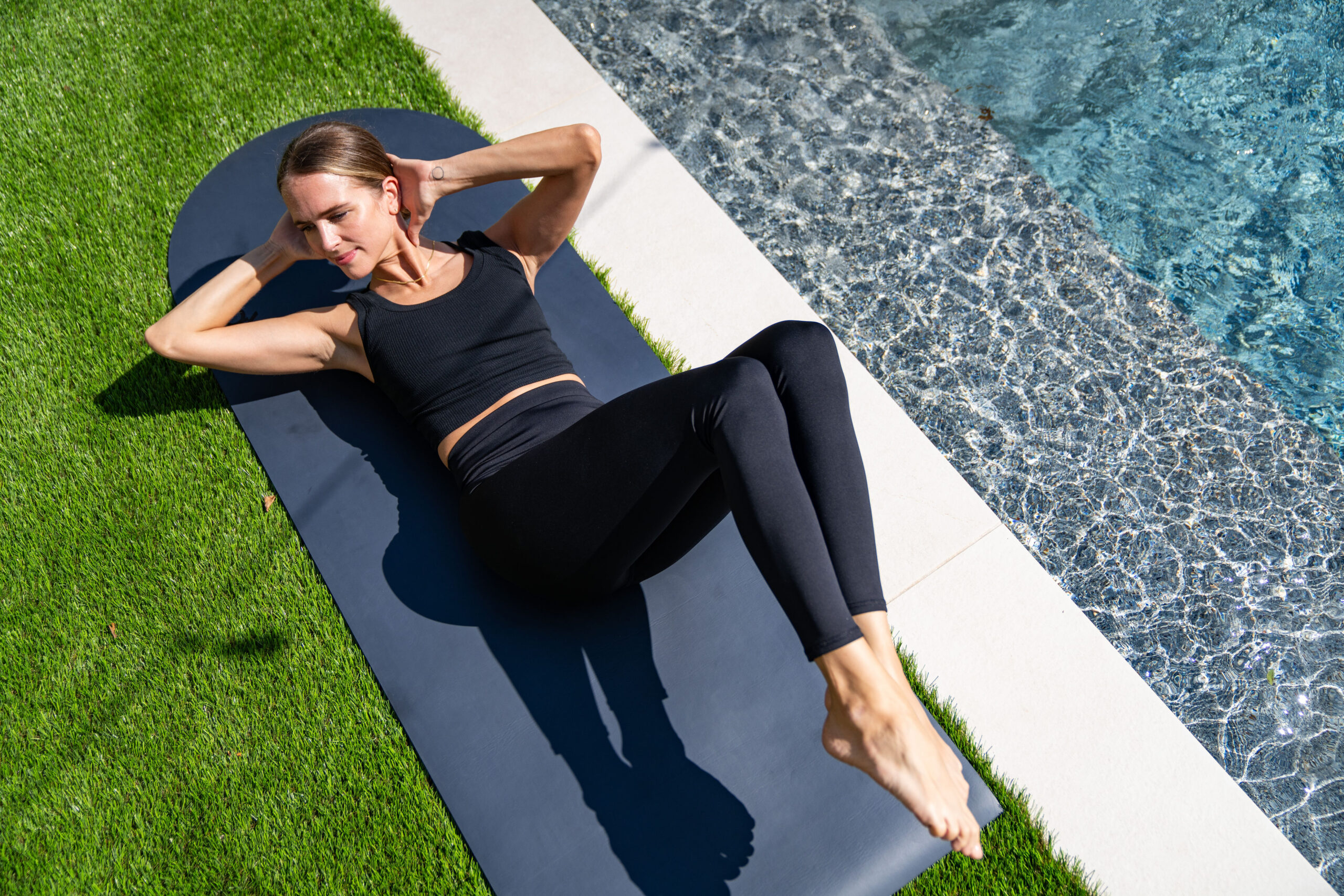


“Engage your core” is one of the most common cues in Pilates. But should you keep your core engaged during every exercise, and throughout your entire workout?
No. Your core should be able to engage when you need it to, and relax when the demand decreases.
Core engagement is helpful when you’re pushing or pulling with resistance, balancing, focusing on oppositional pulls, or controlling the position of your spine and pelvis. But constantly gripping your abdominals can restrict your breathing, create unnecessary tension and make movement feel rigid.
A functional core isn’t tight all the time. It’s responsive.
What Does “Engage Your Core” Really Mean?
Your core is more than your abdominal muscles. It includes a coordinated system of muscles around your trunk, including your abdominals, back muscles, diaphragm and pelvic floor.
These muscles work together to help manage pressure and support your spine and pelvis. The amount of engagement you need, however, should change depending on what you’re doing.
Think about your hand. You wouldn’t make a fist and hold it all day to make your hand stronger. You would create enough tension to grip an object, then release that tension when you put it down.
Your core should have that same adaptability.
When Core Engagement Helps
Core engagement is useful when a movement creates a meaningful demand for stability or control.
In Pilates, that might include:
- Holding your legs in tabletop without losing control of your pelvis
- Curling your head and chest away from the mat
- Extending an arm or leg while keeping your trunk steady
- Balancing on one leg
- Rotating or side bending
- Pushing or pulling against the reformer springs
- Lifting or carrying something heavy in daily life
In these situations, your core helps transfer force through your body and gives you a stable base from which to move.
The goal still isn’t to squeeze as hard as possible. It’s to create the amount of support the movement requires while continuing to breathe.
When Constant Core Bracing Creates More Tension
Problems can arise when “engage your core” becomes “hold your stomach in at all times.”
Constant bracing may make it harder for your rib cage, diaphragm, abdominal wall and pelvic floor to respond naturally to your breath. It can also reduce spinal mobility and cause other muscles to join an effort that should feel more coordinated.
Instead of feeling supported, you may feel stiff, compressed or disconnected from your breathing.
This matters in Pilates because not every exercise is designed to keep the trunk rigid. Some movements ask for stability, while others ask the spine, ribs, pelvis and hips to articulate or move more freely.
If you approach every exercise with the same level of abdominal tension, you lose that variety.
Two Over-Bracing Patterns I See in Pilates Students
After teaching Pilates for more than a decade, I see two patterns appear frequently when students are trying too hard to engage their core.
1. They hold their breath and tense their upper body
A student may pull the stomach in, hold the breath and tighten the jaw, neck or shoulders. The abdominal muscles are certainly working, but the whole body is working harder than the exercise requires.
If your shoulders are creeping toward your ears or you can’t take a comfortable breath, try reducing the intensity. Core support doesn’t have to mean full-body tension.
2. They grip their glutes and tuck their pelvis
Some students try to create abdominal engagement by squeezing their glutes and holding the pelvis in a tucked position. This can make the hips feel restricted and prevent the pelvis and spine from moving when the exercise calls for it.
A pelvic tuck may be part of a particular movement, but it doesn’t need to become your default position. I want students to be able to move into and out of different pelvic positions with control.
What I Cue In Addition to “Engage Your Core”
“Engage your core” can sometimes be too vague, especially for a new student. It tells you to do something, but it doesn’t explain how much effort to use, where the movement should come from or what you’re trying to accomplish.
Sometimes, I prefer cues that connect the core to the specific task.
Depending on the exercise, you might hear me say:
- “Exhale as you move through the hardest part.”
- “Keep breathing into the sides and back of your ribs.”
- “Let the abdominals respond to your exhale.”
- “Keep your pelvis steady as the leg moves.”
- “Lift the spine up and out of the hips.”
- “Soften what doesn’t need to work.”
- “Use only as much effort as you need.”
- “Let your belly, ribs and pelvic floor expand as you inhale.”
These cues give your body a job rather than asking you to hold a contraction without context.
The goal is not to completely relax your core during every inhale or forcefully contract it during every exhale. Breath and core engagement exist on a spectrum. The right amount depends on the exercise, the load and your body.
How to Engage Your Core Without Holding Your Breath
Try this simple exercise:
- Lie on your back with your knees bent and your feet on the floor.
- Place your hands around the sides of your lower ribs.
- Inhale and feel your ribs expand into your hands, including toward the sides and back of your body.
- Exhale through your mouth as if you’re gently fogging a mirror.
- Notice how your abdominal wall naturally firms as the air leaves your body.
- Repeat without squeezing your glutes, forcing your back into the floor or tightening your neck.
That gentle response is one way to experience core engagement. From there, you can add movement and allow the level of support to increase when the exercise becomes more demanding.
How This Works in Common Pilates Exercises
During an abdominal curl
Inhale to prepare, allowing the rib cage to expand.
As you exhale and curl your head and chest away from the mat, allow your abdominals to deepen and your bottom ribs to move toward your pelvis. Keep breathing into the sides and back of your ribs if you remain lifted.
As you return to the mat, let the effort decrease gradually. Once you are completely back to the mat, inhale and release the core completely.
During a squat
As you lower into the squat, inhale and allow your hips and pelvic floor to respond to the downward movement. Your core is still participating, but you don’t need to pull your stomach in as tightly as possible.
As you press into the floor and stand, exhale and let your abdominals respond to the effort.
During feet in straps
You need enough abdominal support to control your pelvis against the movement of the reformer, but your hips and legs should still move freely.
Instead of gripping your stomach, think about keeping the pelvis quiet while the thigh bones move in the hip sockets. If your breath stops or your hips begin to clench, reduce the range of motion or spring challenge.
Should You Engage Your Core While Sitting or Standing?
You don’t need to consciously brace your abdominals all day to maintain good posture.
Your postural muscles already make ongoing, low-level adjustments as you sit, stand, walk and change position. Rather than holding your stomach in, give yourself permission to breathe, shift your weight and move regularly.
If a task becomes more demanding—such as lifting a heavy object—your core engagement can increase to meet that demand. When the task is over, the effort should decrease again.
The Bottom Line
You should not keep your core fully engaged all the time.
Effective core training teaches you how to create support when a movement requires it and how to release unnecessary tension when it doesn’t. Your core should be strong enough to stabilize you, flexible enough to allow movement and responsive enough to change from one moment to the next.
In Pilates, we aren’t trying to build a body that is permanently braced. We’re building a body that can organize itself intelligently around breath, load and movement.
If you tend to hold your breath, grip your glutes or tighten your stomach throughout an entire workout, experiment with doing less. You may find that you can move with more control—not less—when you stop treating tension as the only sign of strength.
For on-demand Pilates classes that teach both core engagement and release, explore my workouts right here.
By Gabrielle Saran
Frequently Asked Questions
Is engaging your core the same as sucking in your stomach?
No. Sucking in your stomach usually creates a rigid, superficial contraction and may interfere with breathing. Functional core engagement involves coordinated support around the trunk while allowing you to continue breathing.
Should your core stay engaged throughout a Pilates class?
Your core will remain active during much of a Pilates class, but the intensity should change. Some exercises require more stability, while others allow more release, mobility and spinal articulation.
How do I know if I’m over-bracing my core?
Common signs include holding your breath, tightening your jaw or shoulders, gripping your glutes, constantly tucking your pelvis and feeling unable to move your spine or hips freely.
Should you engage your core when breathing?
Your core and breathing muscles work together, so some muscular activity naturally occurs with every breath. You don’t need to force a strong contraction each time you inhale or exhale. Aim for breathing that feels three-dimensional and appropriate for the exercise.


