

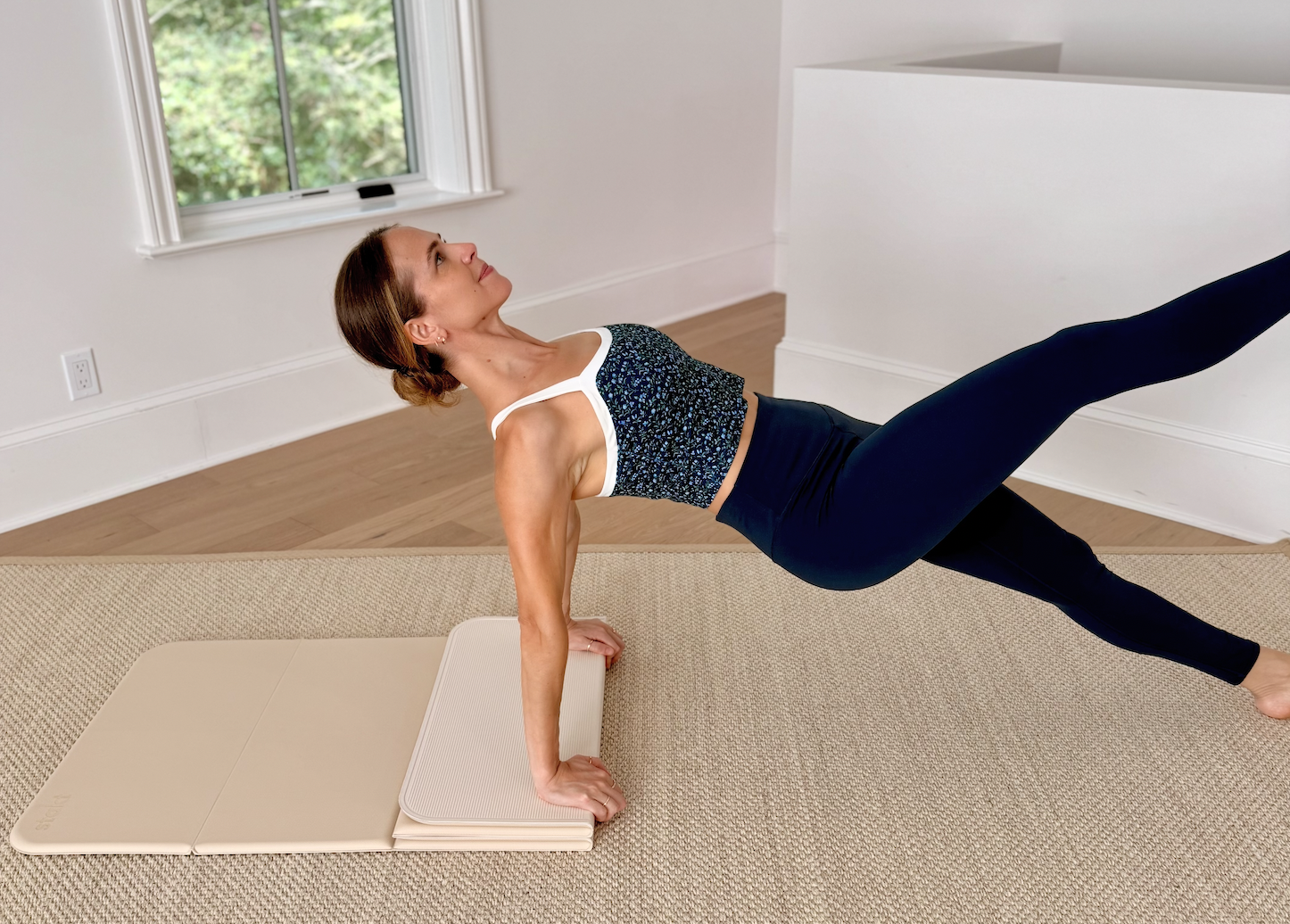


The changing of the seasons always makes me more aware of my habits—how my body feels, how I’m moving, and even my mood. It feels like a natural time to check in with myself.
Posture is a great place to begin. The goal isn’t to judge your body or force it into a “perfect” position. It’s simply to notice. Becoming aware of something you do—consciously or subconsciously—is the first step toward choosing a habit that works better for you.
Lately, I’ve noticed that when I’m sitting at my desk, my face gradually moves closer and closer to the computer. Now, as soon as I catch myself doing it, I lean back and bring my rib cage over my pelvis. Almost immediately, I feel better.
I’ve also noticed that I place most of my weight on one leg while I’m standing and waiting. This isn’t a new discovery, but I’m now making a conscious effort to change the habit. When I feel myself shifting into that one-leg, hip-popping position, I transfer my weight back onto both feet. I remind myself that standing this way can feel more balanced and less tiring—and that little reminder makes the adjustment easier.
These changes may sound small, but small, repeated choices are how new habits begin.
How Pilates Can Support Better Posture
Actively working on posture and breathing can be incredibly helpful on the reformer. Pilates strengthens the back muscles, which can be difficult to target in everyday movement. It can also help us:
- Find a more comfortable alignment for the head and neck
- Open and stretch the front of the body
- Improve spinal mobility
- Build awareness of the pelvis, rib cage, and shoulders
- Develop the strength needed to support better posture
Pilates isn’t about holding yourself rigidly or trying to look a certain way. It’s about understanding your body, recognizing your patterns, and developing more options for how you move.
The posture workout from my YouTube channel, linked above, is a wonderful place to start. As you move through it, stay curious about what you notice. Where are you holding tension? What feels strong? What feels unfamiliar? Can you breathe comfortably?
Remember, awareness comes before change. You don’t need to correct everything at once. Choose one habit, notice it without judgment, and gently redirect yourself whenever it appears. With time, those small moments of awareness can add up to a body that feels more supported, balanced, and at ease.
What posture habit have you noticed lately?
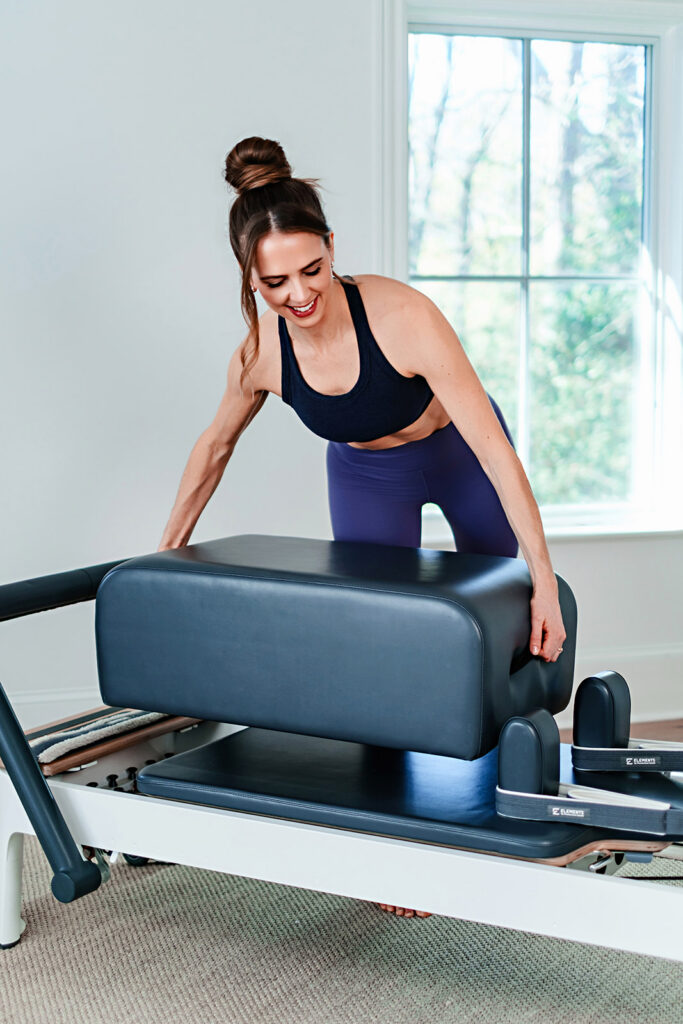
Not sure where to start?
Take the Pilates Path Quiz and I’ll point you to the workouts that fit your body and your experience.
Related Exercises
- Better Posture Starts with Awareness: How Pilates Can Help
- Feet in Straps on the Reformer: How to Set Up and Do It
- Reformer Core Exercises: A 15-Minute Abs Workout
- How to Use a Pilates Reformer Machine: A Beginner’s Guide
- Reformer Pilates Video: A 7-Minute Full-Body Class
Common Questions About Posture
Yes, though not by holding you in a fixed position. Pilates strengthens the muscles along your back and around your shoulder blades, which are hard to reach in everyday movement, and stretches the front of the body that tends to shorten from sitting. It also builds awareness of where your rib cage and pelvis sit, so you start noticing your own patterns.
Awareness comes first. You start catching yourself leaning toward the screen or standing on one hip. The strength changes take longer, generally six to eight weeks of consistent practice before sitting and standing upright begins to feel easier rather than effortful. Frequency matters more than length here. Three shorter sessions a week will do more than one long one.
The Reformer has one key advantage: feedback. The springs and moving carriage help you notice when your weight shifts or your ribs move out of alignment, which can build body awareness. It also provides added resistance beyond your own body weight. Mat Pilates is excellent for posture too, but if you have a Reformer, use it—and if you don’t, mat Pilates is certainly not a lesser option.
Mostly time and attention. When you focus on a screen, your head drifts forward, your rib cage drops in front of or behind your pelvis, and the muscles across your chest gradually shorten while your upper back lengthens and weakens. Nothing is damaged by this, but the pattern becomes your default. The fix is not sitting perfectly all day. It is noticing the drift and resetting, as often as you catch it.
It can. Both patterns come from the same place, which is a chest that has shortened and an upper back that has lengthened and lost strength. Pilates works on both sides of that, opening the front of the body while strengthening the muscles between the shoulder blades. Pilates also focuses on correct head placement as you move through the exercises. The posture workout linked above is a good place to begin, since it covers both.


